

In data centers, industrial equipment, smart home appliances, and automotive applications, thermal efficiency and energy consumption have become critical factors in determining product competitiveness. In recent years, Brushless DC (BLDC) fans have gradually replaced traditional AC fans, becoming the mainstream choice for high-performance cooling systems.
So, what exactly is a BLDC fan? How does it differ from an AC fan? And how should businesses make the right choice?
So, what exactly is a BLDC fan? How does it differ from an AC fan? And how should businesses make the right choice?
一、What is a BLDC Fan?
A BLDC fan is a cooling fan driven by a Brushless DC Motor.
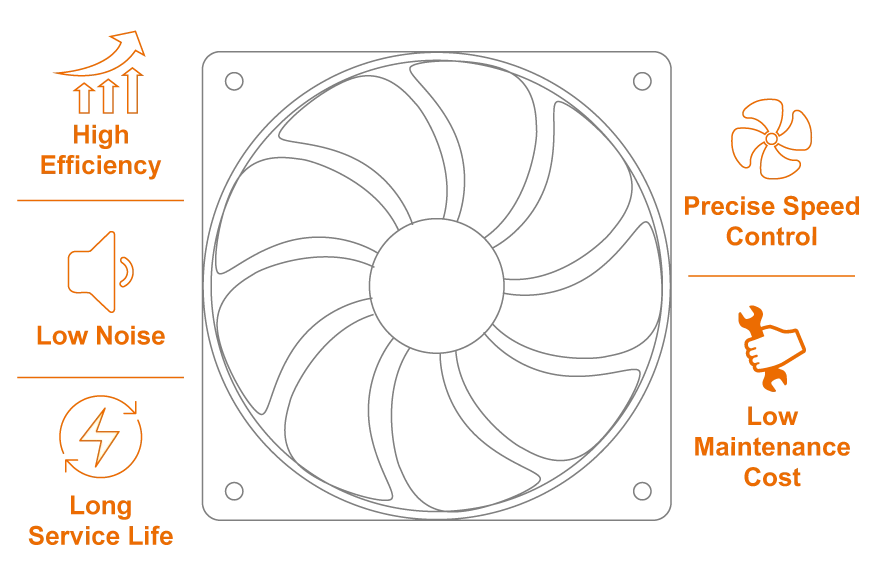
Unlike traditional brushed motors, BLDC motors use electronic commutation instead of carbon brush mechanical contact, providing the following advantages:
In modern equipment, BLDC fans are widely applied in:

AI Data Center Servers

Medical Equipment

Electric Vehicle Thermal Management Systems
Communication Equipment

Industrial Automation Systems
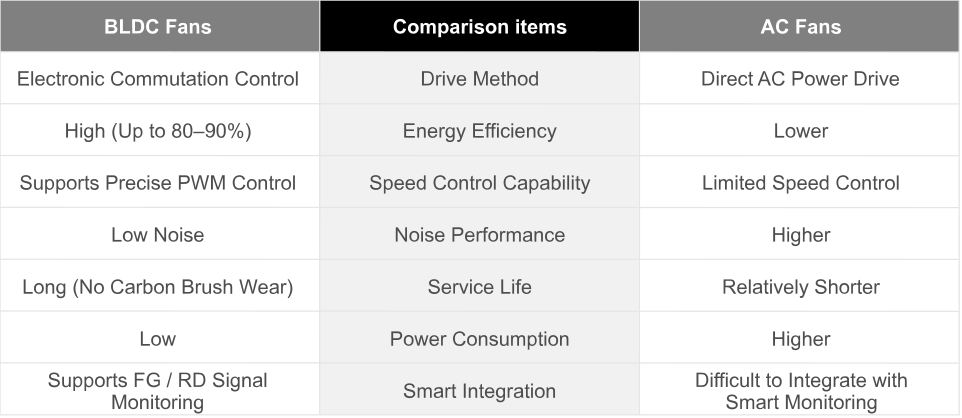
二、Comparison Between BLDC Fans and AC Fans
A comparison from the technical and application levels is presented below:
三、Why Do High-End Devices Choose BLDC Fans?
.Higher Energy Efficiency
As ESG and energy-saving regulations become increasingly strict, equipment manufacturers must reduce overall power consumption. BLDC fans effectively lower energy consumption and are especially suitable for 24/7 operating equipment such as data centers.
.Lower Maintenance Costs
Due to the brushless design, BLDC fans experience less wear and have longer service life, significantly reducing maintenance and replacement frequency.
.Precise Speed Control
Through PWM control and feedback signals (FG / RD), airflow can be dynamically adjusted according to temperature changes.
Reduce Unnecessary Power Consumption
Reduce Noise
Extend Service Life
.More Suitable for Smart Systems
BLDC fans can be integrated into IoT systems, predictive maintenance platforms, and automotive electronic control systems.
Compliant with future smart equipment and supply chain audit requirements.
Analysis of the Differences between Axial Fans and Centrifugal Fans
In thermal management system design, selecting the correct fan type directly affects equipment performance and energy efficiency.
The two most common cooling solutions are axial fans and centrifugal fans.
The two most common cooling solutions are axial fans and centrifugal fans.
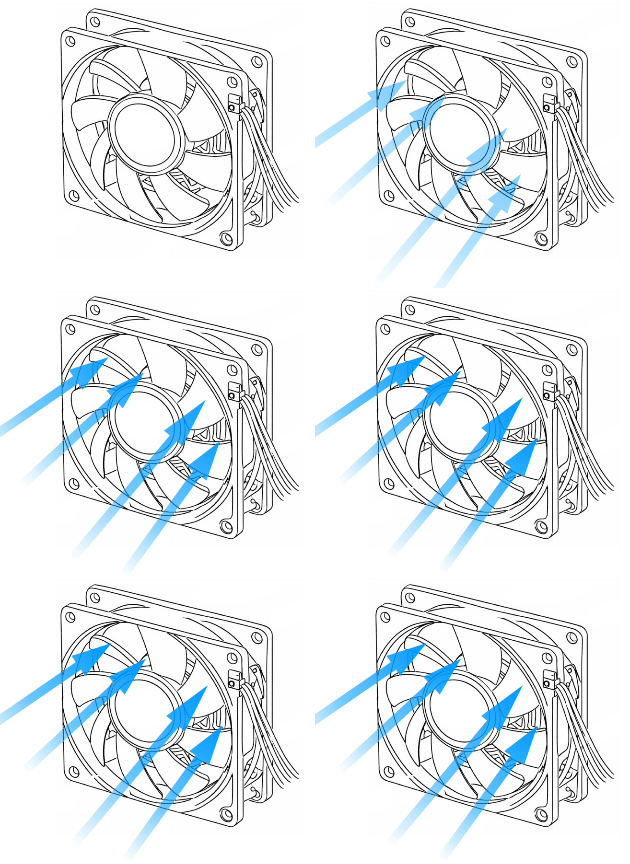
Axial Fan
The airflow direction of an axial fan is parallel to the fan axis, allowing air to flow straight along the blade rotation direction.
Features
High Airflow
Simple Structure
Lower Cost
Relatively Low Noise
Suitable for Low-Impedance Environments
Applications
PC & Server Cooling
Communication Equipment
Power Supplies
Air Purifiers
General Ventilation Systems
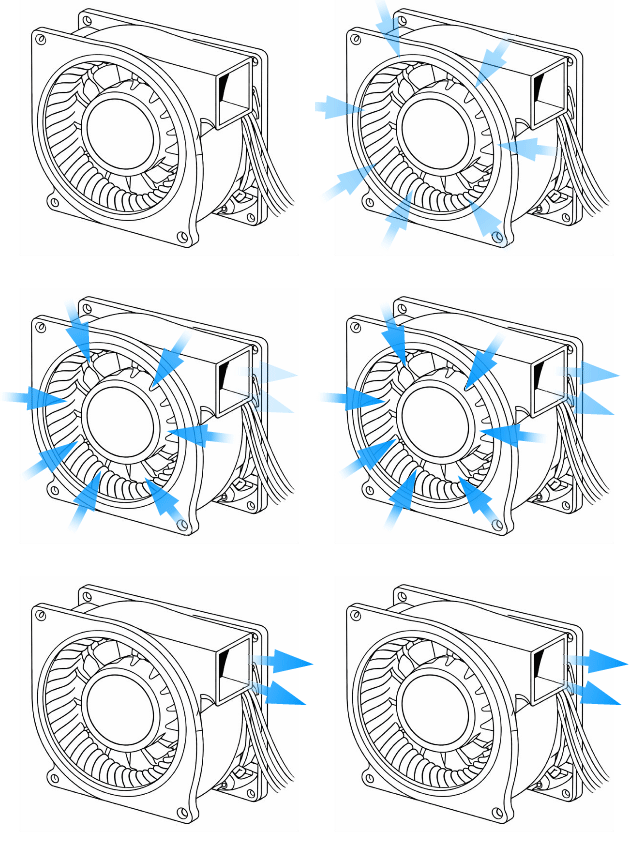
Centrifugal Fan
Centrifugal fans adopt a centrifugal design where air enters axially and is discharged outward at a 90-degree angle.
Features
High Static Pressure
Suitable for High-Impedance Airflow Channels
Compatible with Air Duct Integration Designs
High Flexibility in Structural Design
Applications
Notebook Cooling
AI Servers
Automotive Cooling Systems
Precision Electronic Equipment
Cooling Systems for Limited Spaces
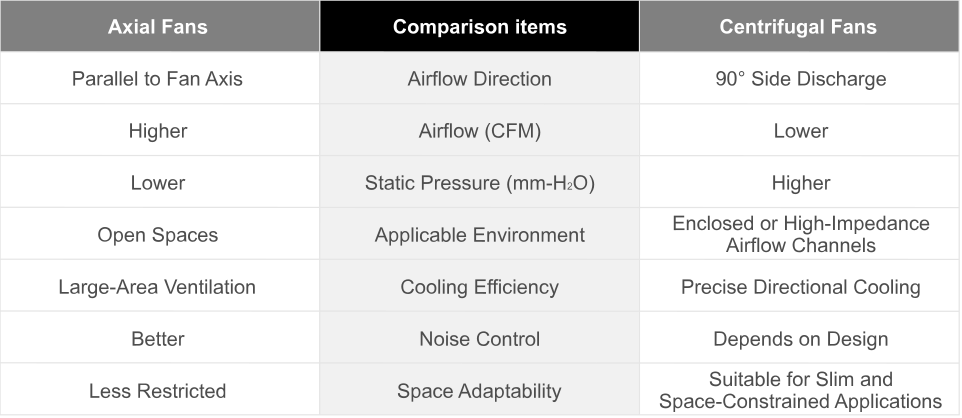
Technical Comparison: Axial Fans vs. Centrifugal Fans
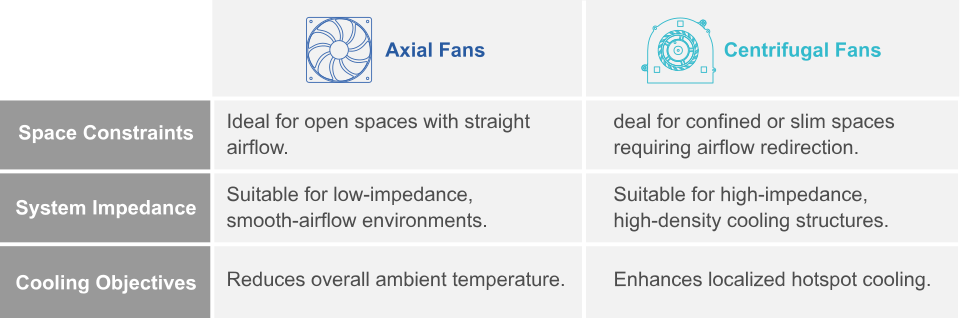
How to Choose a Cooling Fan?
Choosing a cooling fan is not only about airflow (CFM), but also about balancing static pressure, airflow path, and motor efficiency.
In different application scenarios, fan selection directly affects cooling efficiency and system stability.
In different application scenarios, fan selection directly affects cooling efficiency and system stability.
Core Technical Parameters
Fan performance fundamentally depends on the balance of blade design, motor capability, and system impedance.
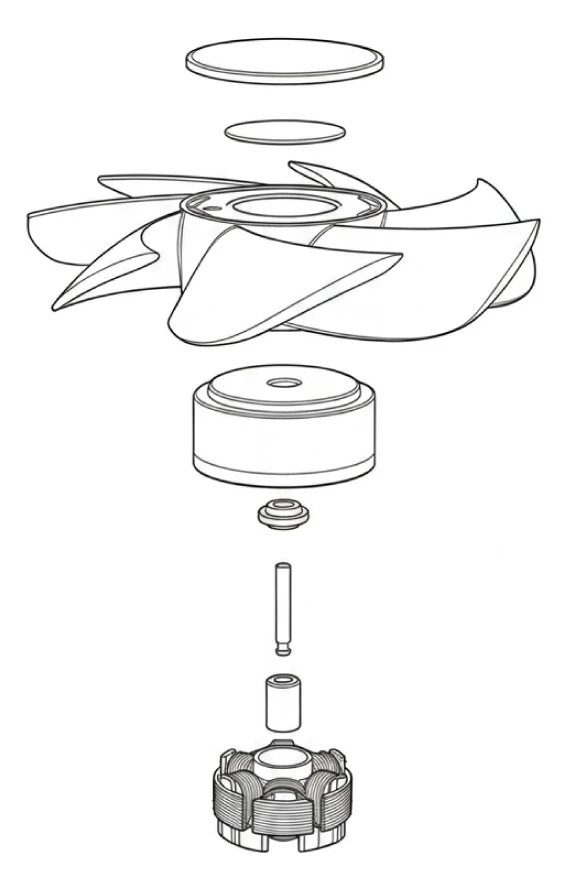
1. Key Performance Factors
Blade Design × RPM → Airflow (CFM) & Static Pressure
Blade Design:
Determines airflow characteristics and efficiencyRPM:
Affects airflow and static pressure, while also increasing noise and power consumption2.Torque & Impedance Balance
The core of fan operation lies in balancing motor output and system resistance:
Output Torque − System Resistance = Effective Operating Capability
Sources of Resistance:
Air Resistance: Comes from heat sink fins and airflow channel design.
Friction Resistance: Affected by temperature, lubrication, and bearings.
3. BLDC Motor Efficiency & Control
During low-speed (Low Duty) operation:
Torque Decreases
Control Difficulty Increases
Key Considerations:
BEMF (Back Electromotive Force) Control
Generator Constant
Ensuring stable low-speed operation without stalling
Why Do High-End Devices Commonly Use Centrifugal Fans?
In AI data centers, gaming laptops, and automotive electronic systems, internal airflow channels are complex and space is limited, therefore:
Therefore, most high-performance devices adopt BLDC centrifugal fans.
High Static Pressure Penetration Capability Required
Directional Exhaust Required
Integrated Structural Design Required
How Does BLDC Technology Improve Both Types of Fans?
Whether using axial or centrifugal fans, adopting BLDC motors further improves:
This is also the key reason modern cooling systems are transitioning from AC to BLDC.
Energy Efficiency
Fan lifespan
Precise PWM Speed Control
FG / RD Signal Monitoring
Smart Integration Capability
Selection Is Not Just About Products, but System Design
In high-end applications, simply replacing the fan is not enough; integration is required for:
This is why customized design is crucial in the B2B cooling market.
Airflow Channel Design
Blade Angle
Motor Power
Noise Balance